
This guide covers the key things you need to know about inheriting real estate in Washington state - including the tax implications that are often misunderstood, the decision framework for what to do with the property, and how the sale process works when selling an inherited home in the Seattle market.
Understanding What You Have Actually Inherited
Before making any decisions about an inherited property, get a clear picture of what you actually own - or share ownership of with other heirs. This means understanding the property’s current market value, any outstanding mortgage balance, property tax status (including whether taxes are current or in arrears), any liens attached to the property, HOA obligations if applicable, and the cost of bringing any deferred maintenance issues up to a habitable or sellable standard.
In the Seattle area, where property values are high, many heirs discover that the inherited home has substantial equity - sometimes several hundred thousand dollars - even after accounting for any outstanding debt. That equity represents a significant financial opportunity, but protecting it requires acting thoughtfully rather than reactively. Letting an inherited property sit vacant for months while you sort through the decision adds carrying costs, insurance complications, and potential maintenance issues that reduce the net value you ultimately receive.
Does the Property Need to Go Through Probate?
Whether the inherited property must pass through Washington state’s probate process before it can be sold depends on how it was titled. Property held in joint tenancy with right of survivorship, in a living trust, or subject to a transfer-on-death deed transfers automatically to the surviving owner or beneficiary without probate. Property owned solely by the deceased - or held in tenancy in common - typically requires probate before it can be sold.
Washington’s probate process under RCW Title 11 includes a four-month creditor notice period but can be managed efficiently by a personal representative with non-intervention powers under RCW 11.68, which allows the sale to proceed without court confirmation at each step. A Washington estate attorney can clarify quickly whether probate is required and what the timeline will look like for your specific situation.
The Stepped-Up Basis: The Most Important Tax Fact for Inherited Property
One of the most significant financial benefits of inheriting real estate - and one that many heirs do not fully understand - is the stepped-up cost basis rule. Under federal tax law, when you inherit property, your cost basis in that property is "stepped up" to the fair market value of the property at the date of the prior owner’s death, not the original purchase price.
This matters enormously for Seattle-area heirs. Consider a home purchased in the 1990s for $180,000 that is now worth $850,000. If the original owner had sold it, they would have owed federal capital gains tax on much of that $670,000 gain (minus the primary residence exclusion). But as an heir, your basis is $850,000 - the date-of-death value. If you sell the property soon after inheriting it for $850,000, you owe no federal capital gains tax on the sale. If you hold the property and sell it later for $920,000, you only owe capital gains tax on the $70,000 of appreciation that occurred after you inherited it.
Washington state’s capital gains tax explicitly exempts real estate sales, so there is no Washington state capital gains tax on the sale of inherited property regardless of the gain. However, Washington does have an estate tax - the Washington estate tax applies to gross estates above $2.193 million (2024 threshold) at marginal rates of 10-20%. This estate-level tax is separate from the heir’s capital gains situation and is paid by the estate before assets are distributed, not by the heir at sale. An estate attorney and CPA should review the full tax picture for larger estates.
Financial Responsibilities You Take On Immediately
Inheriting a property means inheriting its ongoing financial obligations from the date you take ownership. These include property taxes (King County property taxes are billed twice yearly and become delinquent with penalties if not paid), any existing mortgage payments (if the deceased had a mortgage, payments must continue or the lender can begin foreclosure proceedings), homeowner’s association dues if applicable, and utility costs to keep the property from deteriorating (heat, basic electricity, water). If the estate is still in probate, the personal representative is responsible for these costs from estate funds - but once the property is distributed to heirs, the ongoing financial responsibility shifts to them.
Failing to keep property taxes current on an inherited Seattle-area home is a particularly costly mistake. King County property tax delinquencies accrue interest and penalties, and a tax lien can complicate or delay any future sale. If you inherit a property with past-due taxes, the estate or heirs must bring the account current before clear title can pass at closing.
Your Three Main Options with an Inherited Property
Option 1: Move In. If the inherited property is in a location and condition that works for your life, moving in is a legitimate option. You take ownership, establish it as your primary residence, and your cost basis is the stepped-up value at the date of inheritance. If you later sell after living in it for 2+ years, you can apply the federal primary residence capital gains exclusion ($250,000 for single filers, $500,000 for married couples) to any additional appreciation.
Option 2: Rent It Out. Keeping the property as a rental can generate ongoing income, particularly in the Seattle metro where rental demand is consistently strong. However, becoming a landlord involves real responsibilities: property maintenance, tenant screening, lease management, handling repairs, and complying with Washington’s landlord-tenant laws under RCW 59.18. In Kenmore and throughout north King County, the rental market can support strong rents - but managing a rental property from a distance, or without prior experience, creates significant time and financial demands that heirs should evaluate honestly.
Option 3: Sell It. Selling the inherited property - whether through a traditional listing or a direct cash sale - converts the equity to liquid assets you can use immediately. For most heirs who do not plan to live in or actively manage the property, selling is the most straightforward path to realizing the financial value of the inheritance. The stepped-up basis rules mean the tax cost of selling is typically low if the sale occurs reasonably close to the date of inheritance.
If You Decide to Sell: Listing vs. Direct Cash Sale
When selling an inherited property in the Seattle area, the choice between a traditional listing and a direct cash sale depends on the same factors that apply to any sale - but with a few additional considerations specific to inherited properties.
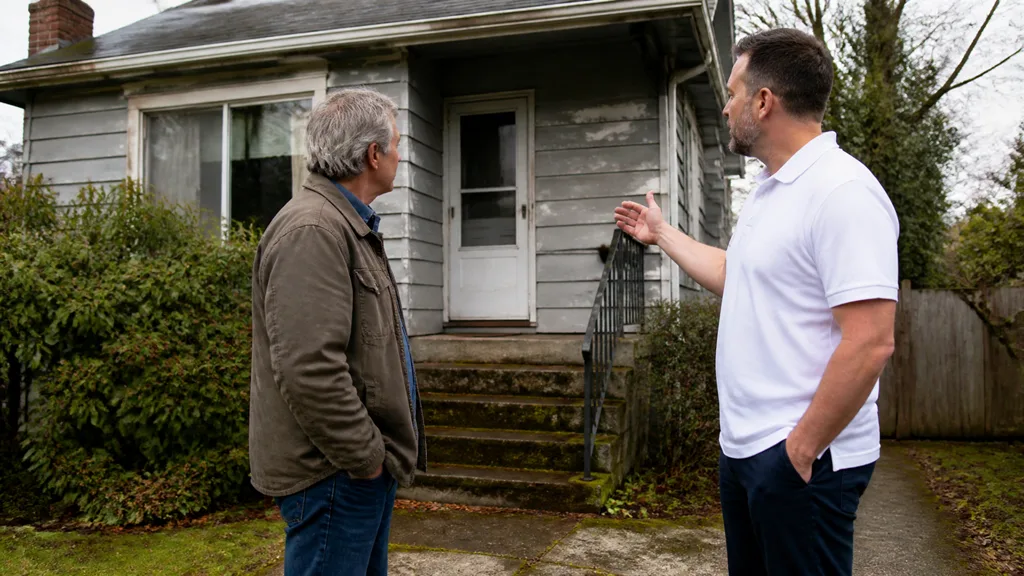
Many inherited homes have deferred maintenance. Elderly owners often reduced upkeep in their later years, and properties that have been vacant for months during the probate process can develop additional issues. A traditional listing of a property with significant deferred maintenance will likely draw inspection contingencies, repair requests, and a buyer pool limited to cash buyers or renovation-focused purchasers. A direct cash sale purchases the property as-is - no repairs, no inspection contingencies, no carrying costs during a listing period.
Out-of-state heirs face additional practical challenges with a traditional listing. Managing a listing process from another state - coordinating showings, handling inspection findings, managing repairs - is logistically demanding. In Bremerton and across the greater Puget Sound, many out-of-area heirs who initially considered listing ultimately chose a direct cash sale because the logistical simplicity of an as-is transaction outweighed the potential gross price benefit of a listed sale, particularly once they accounted for the cost of preparing the property for market.
Multiple heirs add another layer of complexity. When two or three siblings or family members inherit a property together, all must agree on the sale terms and sign at closing. Disagreements about price, timing, or sale method can delay a listing significantly. A direct cash offer provides a fixed, defined number that simplifies the conversation among heirs and reduces the opportunity for ongoing negotiations to create conflict.
Managing the Property During the Decision Period
Vacant inherited properties in the Seattle area face specific risks that require attention even before you have made a final decision about what to do with the property. Homeowner’s insurance policies typically have vacancy clauses that reduce or eliminate coverage after a property has been unoccupied for 30-60 days - notify the insurance carrier immediately when a property becomes vacant and obtain a vacancy endorsement or separate vacant property policy if needed.
King County and many Seattle-area municipalities have code enforcement programs that actively monitor vacant properties. Overgrown landscaping, broken windows, unsecured doors, and accumulated debris can trigger code violations and fines that fall on the estate or heirs. Basic maintenance - securing the property, maintaining the exterior, and winterizing the plumbing during cold months - protects the asset’s value while you work through the decision process. If the property has been vacant for an extended period and you are unsure of its condition, a licensed home inspector can provide a written assessment of deferred maintenance priorities for a few hundred dollars - a worthwhile investment before deciding whether to repair and list or sell as-is directly.
Moving Forward with Clarity
Inheriting real estate in SeaTac or anywhere across the Seattle metro puts a valuable asset in your hands - but making the right decisions about it requires understanding the full picture: the financial position, the tax implications, the condition of the property, and what each option would actually produce for you and any co-heirs involved. The goal is not just to sell quickly or to maximize the gross sale price, but to make the decision that genuinely serves your financial wellbeing and allows everyone involved to move forward with clarity and a fresh start.
If you have inherited a Seattle-area property and want to understand what it is worth in its current condition - and what a direct cash sale would look like as an option - contact us today or call (206) 222-1461. We work with heirs and personal representatives throughout Washington state, purchase inherited properties in any condition, and give you an honest, no-pressure assessment of your options.