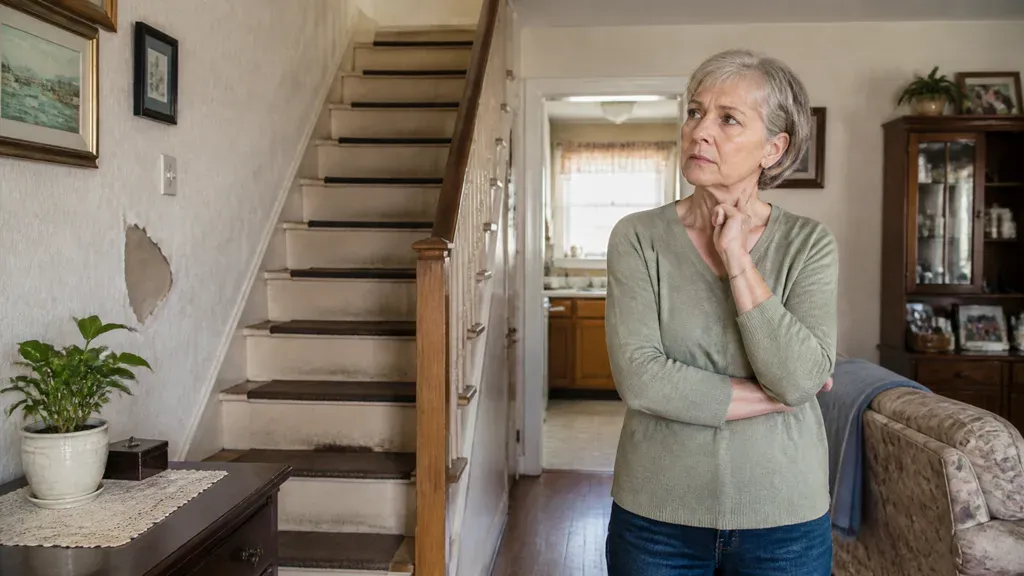
The Seattle housing market has a particular version of this problem. With home values that rose sharply over the 2015-2022 period, many homeowners find themselves in homes that were affordable when purchased but have become carrying cost burdens as property taxes, insurance, and maintenance have risen alongside values. Others are in homes that fit an earlier chapter of their life - a starter home that a growing family has outgrown, a large family home that empty nesters are rattling around in, or a fixer-upper that never got fixed. Whatever the mismatch, the costs are real and quantifiable.
The Overbought Home: When Monthly Costs No Longer Make Sense
Buying more home than your income comfortably supports is one of the most common sources of ongoing financial stress for Seattle-area homeowners. Standard lending guidelines allow borrowers to allocate up to 43 percent of gross monthly income to debt payments - but that ceiling leaves very little margin for savings, retirement contributions, or the unexpected. When mortgage payments, property taxes, insurance, and HOA fees together consume 35-40 percent of take-home pay, there is no buffer for a furnace replacement, a medical bill, or a job disruption. The home becomes a financial constraint on every other area of life.
In Kirkland and throughout the Eastside, where median home prices remain well above $1 million, the overbought problem is particularly acute for homeowners whose income has changed since purchase - through job loss, divorce, retirement, or a shift from two incomes to one. The monthly payment that was manageable at purchase becomes unsustainable when circumstances change, and the longer a homeowner waits to address that mismatch, the more equity gets consumed by carrying costs, deferred maintenance, and stress.
Property Taxes and Insurance: The Rising Floor of Seattle Homeownership
King County property taxes are calculated based on assessed value, and with assessed values rising significantly over the past decade, property tax bills have grown substantially for homeowners throughout the Seattle area. Effective property tax rates in King County typically run 0.8-1.1 percent of assessed value annually - which means a home assessed at $800,000 carries an $6,400-$8,800 annual property tax bill. In Snohomish County, rates are similar. These costs are not optional, do not go away when the mortgage is paid off, and increase as assessed values rise.
Homeowner’s insurance in the Seattle area has increased meaningfully in recent years as insurers reassess risk across Washington state. For standard single-family homes, premiums typically run $1,200-$2,500 annually, with older homes, homes with knob-and-tube wiring, or homes in areas with elevated wildfire or flood risk carrying higher premiums. Some insurers have reduced their exposure in Pacific Northwest markets, creating situations where coverage that was inexpensive and automatic several years ago now requires shopping and involves meaningfully higher costs.
Maintenance and Deferred Maintenance: The Hidden Compounding Cost
The conventional rule of thumb for home maintenance budgeting is 1-2 percent of the home’s value annually. For a $700,000 Seattle-area home, that is $7,000-$14,000 per year in expected maintenance costs - costs that are real whether or not they are budgeted for. Homeowners who do not set aside for maintenance do not avoid the costs; they defer them, and deferred maintenance compounds. A $500 roof repair that is delayed becomes a $5,000 repair when water damage extends to the decking; a $1,200 sewer scope and cleaning becomes a $15,000 lateral replacement when root intrusion has been ignored for years.
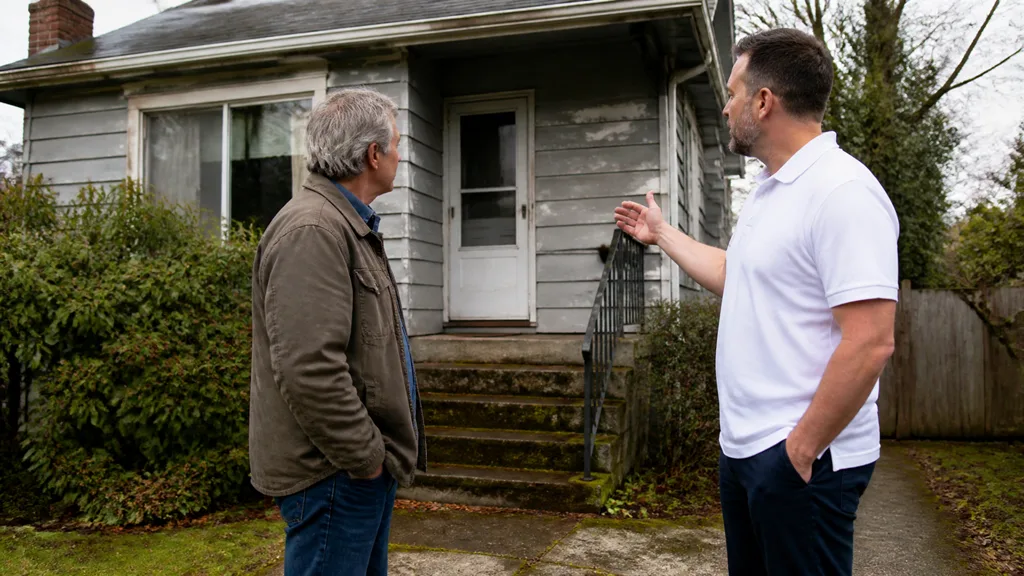
In Everett and throughout Snohomish County, where a significant portion of the housing stock was built between 1950 and 1985, deferred maintenance is one of the most common reasons homeowners contact us. The home has accumulated a backlog of needed work - siding, roofing, electrical updates, plumbing - that feels overwhelming both logistically and financially. The carrying cost of a home in that condition is not just the monthly payment; it is the monthly payment plus the steady accumulation of deferred repair costs that will eventually have to be addressed by someone.
The Location and Lifestyle Mismatch
Not all wrong-home costs are financial in the traditional sense. The cost of a home that requires a 90-minute commute each way is measured in time, health, and quality of life as much as in gas and vehicle wear. The cost of a home in the wrong school district is measured in the alternatives you pursue to compensate - private school tuition, tutoring, activities that fill gaps. The cost of a home that is too large for your current household is measured in the time and money spent heating, cooling, cleaning, and maintaining space that serves no purpose. In high-cost markets like Seattle, where property taxes, insurance, and utilities scale with square footage and value, the ongoing expense of unused space compounds quickly. These are genuine costs, and they are just as relevant to the decision of whether to stay or sell as the mortgage payment.
Opportunity Cost: What Your Equity Could Be Doing
For many Seattle-area homeowners, the most significant cost of the wrong home is the opportunity cost of equity that is tied up but not working. A homeowner with $350,000 in equity sitting in a home that no longer fits their life is forgoing whatever that capital could generate if deployed differently - whether that is a smaller home with dramatically lower carrying costs, a move to a lower cost-of-living area, debt payoff, retirement savings, or seed capital for a business. Equity sitting idle in a home that creates ongoing stress is not neutral - it is an active cost in the form of foregone alternatives. And every month that the decision to sell is delayed, the opportunity cost continues to accumulate alongside the carrying costs, the deferred maintenance, and the quality-of-life toll - making inertia one of the most expensive choices a homeowner can make.
Washington State Tax Considerations When Selling
One concern that keeps some Seattle-area homeowners in the wrong home longer than they should stay is anxiety about the tax consequences of selling. Understanding those consequences accurately is important - because for most sellers, they are far less severe than feared. The federal primary residence capital gains exclusion allows single filers to exclude up to $250,000 in gain from taxable income, and married filers to exclude up to $500,000, if they have lived in the home as their primary residence for at least two of the five years prior to sale. For many Seattle-area homeowners who purchased before 2015, significant appreciation is sheltered by this exclusion.
Washington state does not impose a personal income tax, and while WA enacted a capital gains tax in 2022, it explicitly exempts real property - meaning the gain from a home sale is not subject to Washington’s capital gains tax regardless of the amount. The Washington Real Estate Excise Tax (REET), paid by the seller, applies to the sale price at graduated rates starting at 1.1 percent - a meaningful but predictable closing cost that can be factored into your net proceeds calculation before you decide. For most homeowners who have been in their Seattle-area home for several years, the net after-tax proceeds from a sale are substantially larger than they expect, and understanding those numbers accurately is what enables a genuine fresh start decision rather than a delayed one.
When to Recognize It Is Time to Sell
In Shoreline and across north Seattle, we work with homeowners who have been aware for months or years that their home is the wrong fit but have delayed acting because selling feels complicated, uncertain, or emotionally difficult. The clearest signal that it is time to move forward: when the cumulative monthly emotional and financial cost of staying clearly exceeds the short-term discomfort of the selling process. That calculation is different for everyone - but for homeowners carrying a financially draining home in a high-cost market like Seattle, the cost of inaction is measured every single month.
If you want a clear picture of what your Seattle-area home would net through a traditional sale or a direct cash offer - so you can make an informed decision rather than guessing - contact us today or call (206) 222-1461. We give you a straightforward offer based on your property’s actual condition, and we let you decide on the timeline. No obligation, no pressure - just a realistic look at your options and a clear path toward a fresh start that fits your life as it actually is today.